Documenting Donor Intent: A Nonprofit Guide to Grant Compliance and Audit Readiness
Quick answer up front
- Always get donor intent in writing (gift agreement, email, check memo, legacy statement).
- Record the restriction in your accounting system and give the gift a named fund or subaccount.
- Match grant requirements and allowable costs in a grant checklist before you sign.
- Build a single digital repository organized by fund/grant with clear retention and access rules so an auditor — or an anxious program director — can find what they need fast.
A short legal/accounting note: This post explains best practices and common requirements, but does not replace professional legal, tax, or audit advice. When donor language is ambiguous or a significant restriction is proposed, consult your nonprofit attorney or CPA.
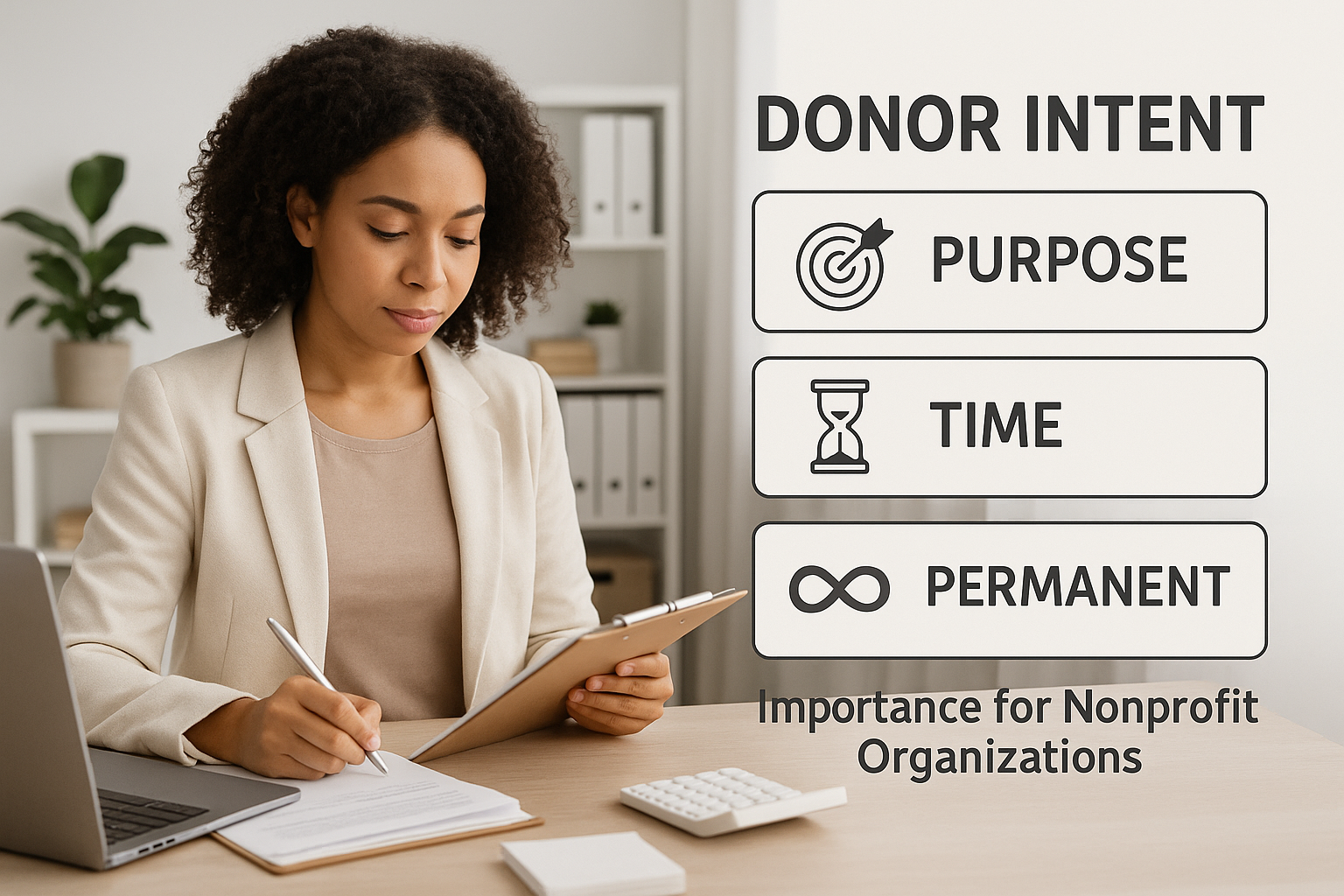
Understanding Donor Intent What It Is and Why It Matters
Definition and Legal Importance of Donor Intent
Donor intent is simply what the donor expects their gift to accomplish. Practically, it’s the donor’s stated purpose or restriction: “for the general operating fund,” “for scholarships for City High students,” or “to establish an endowment for program X.” Written intent matters because:
- It determines how you classify the gift in fund accounting (restricted vs unrestricted).
- It creates expectations you must honor — failure to follow donor directions can harm reputation, trigger complaints, or lead to legal disputes.
- Funders and auditors look for consistent documentary evidence tying dollars to purpose and performance.
How Donor Intent Is Expressed
Donor intent appears in many places — gift agreements, signed pledge forms, grant contracts, emails, check memos, legacy statements, donor-advised fund recommendations, or even foundation board approvals. Overall, the strongest evidence is a signed, dated document that states purpose, time limits (if any), and any conditions.
Broad vs Specific Donor Values and Restrictions
Donors sometimes give in values-language (“support arts education”) rather than program-specific rules (“support the after-school violin program at X school”). Both are legitimate, but the vaguer the language, the more room for programmatic judgment — which is fine if the donor wants flexibility. When a fund must be spend-restricted (temporary or permanent), clarify whether the donor expects:
- Time-limited use (temporary restriction)
- Perpetual principal preservation (permanent restriction or endowment)
If intent is unclear, ask. Don’t guess.

Best Practices for Documenting Donor Intent in Nonprofits
Creating Clear Written Donor Agreements
Start with plain language that answers: who, what, when, and any conditions. Essential elements:
- Donor name and contact information
- Gift amount and payment schedule
- Exact purpose language (short, clear sentence)
- Whether the gift is restricted, temporarily restricted, or unrestricted
- Any reporting or recognition expectations
- Signature lines and date for both donor and authorized nonprofit representative
Sample wording snippets you can adapt:
- Temporary restriction example: “This gift of $25,000 is designated for fiscal year 2026 program expenses for [Program Name]. Any remaining funds after June 30, 2026, may be reallocated with written consent of the donor.”
- Permanent restriction example: “This gift of $100,000 is to be held permanently as an endowed fund to support annual scholarships for students from [County]. Only income and gains may be used.”
Supplementing Agreements with Letters, Emails, and Legacy Statements
However, not every gift will have a long-form agreement. Acceptable supporting documentation:
- A signed donor pledge or memorandum that states purpose
- An email from the donor that clearly describes the gift and purpose (retain header information)
- A donor legacy statement or remainder trust document for planned gifts
- Check memos and pledge cards (useful but weaker than a signed agreement)
So, always attach these to the gift record in your donor database and accounting file.
Organizing and Maintaining Donor Intent Records
Create a permanent donor file (digital and/or physical) that travels with the fund. File contents should include:
- Signed agreement or supporting email/letter
- Payment records (checks, ACH, bank deposit slips)
- A donor communications log (calls, updates, reports)
- Board approvals (if the board accepted restricted terms or designated funds)
- Gift acknowledgment letters and tax receipts
Practical folder structure (digital): /Donors/Smith Family/2025 Gift – Smith Scholarship/Agreement.pdf
Using Donor Intent in Accounting and Reporting
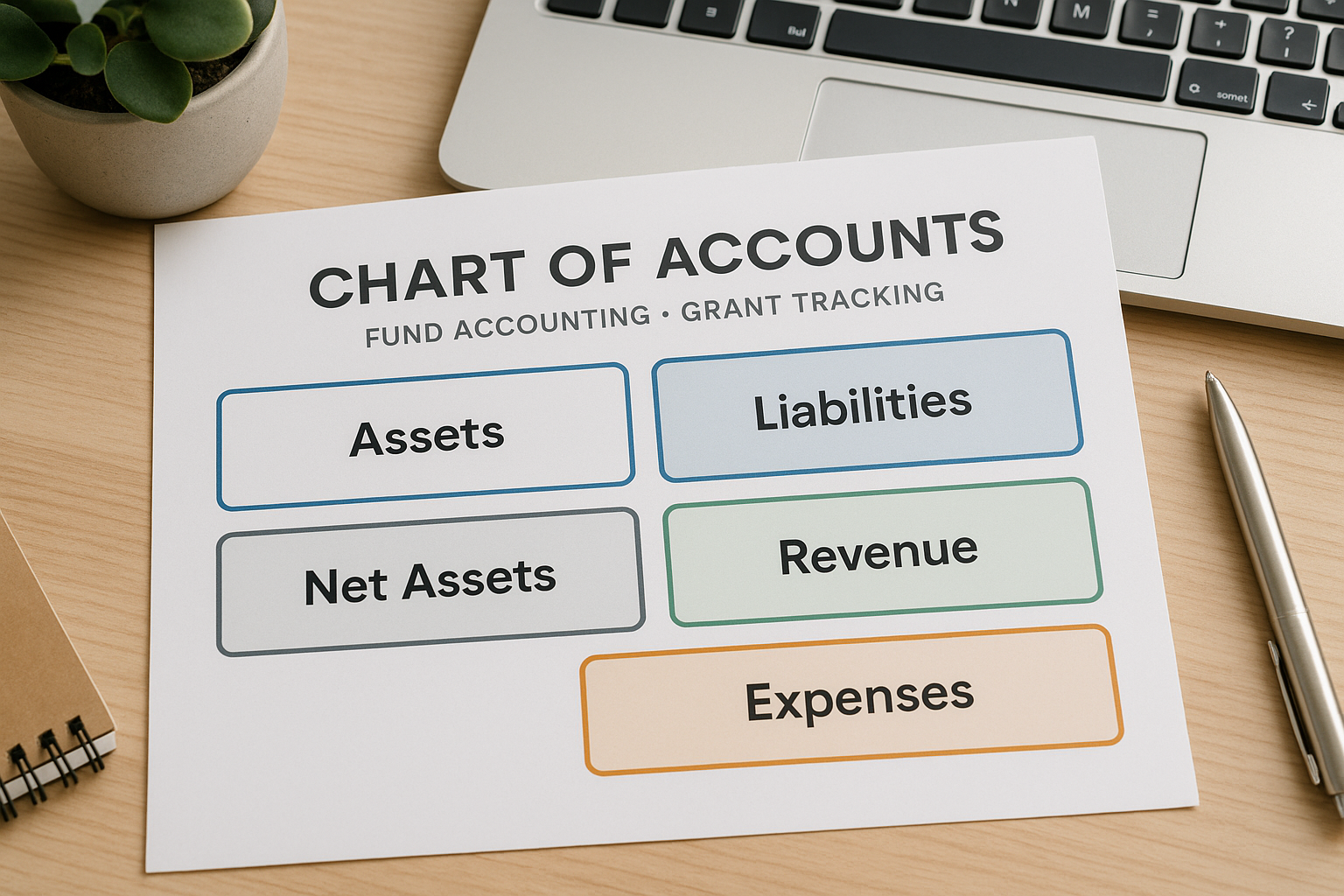
Translate the documented intent into your chart of accounts:
- Create dedicated funds or subaccounts for donor-restricted gifts (e.g., Fund 220 – Smith Scholarship Fund)
- Tag gifts in your CRM and accounting system to link donor record to fund and to any reporting deliverables
- When restriction is released (time elapses or purpose achieved), record the release formally in the ledger and in donor communications
Small example: A $50,000 temporary scholarship gift received in 2024 to be spent in 2025 should be recorded as temporarily restricted revenue in 2024 and reclassified to unrestricted (released from restriction) when the scholarship is awarded in 2025.
Wrap-up: Treat donor intent as both a legal and stewardship document — it protects donors and your organization. Now let’s make grant agreements equally robust.
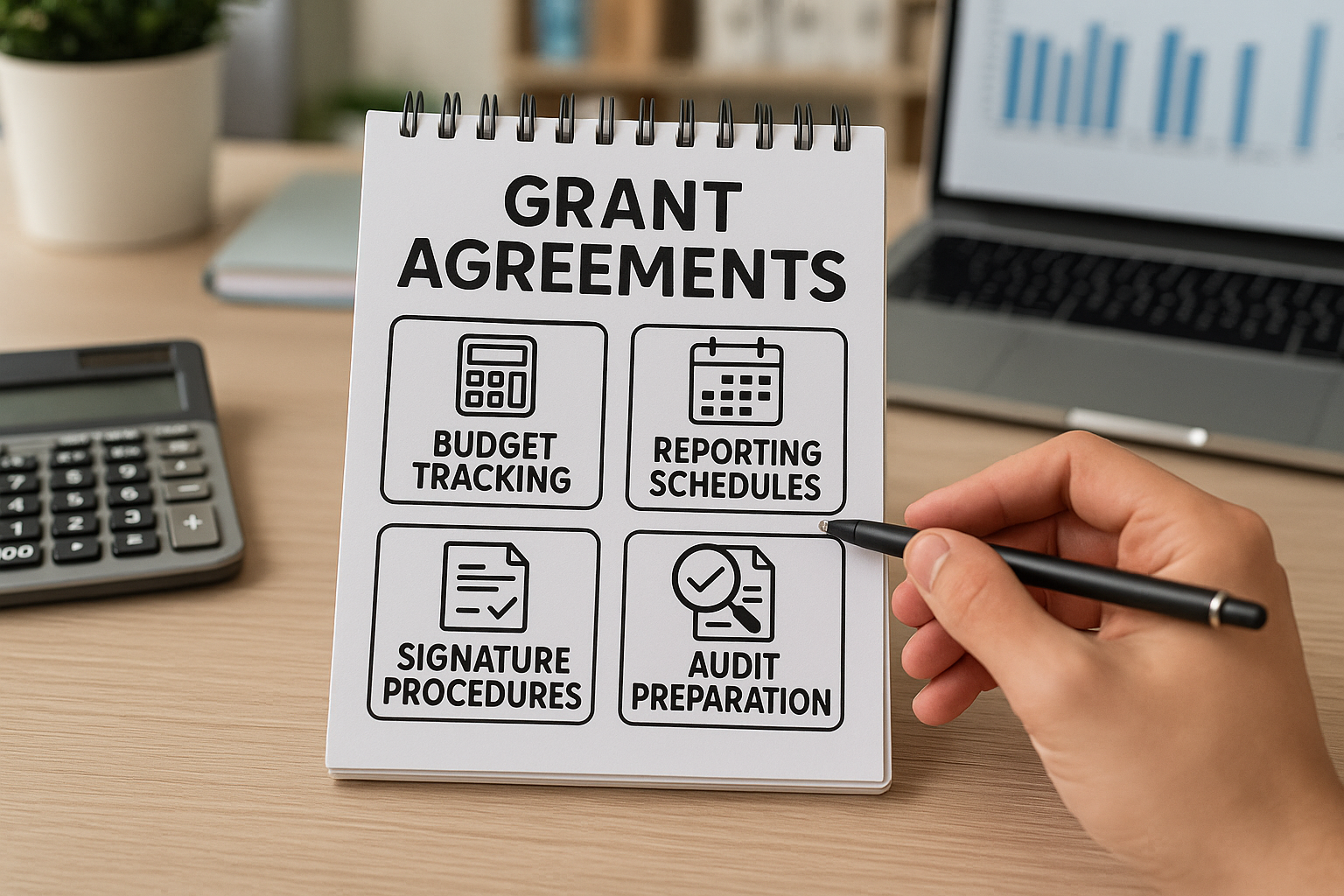
Grant Agreement Checklist for Nonprofits Key Compliance Items
Reviewing Grant Purpose Budget and Timeline
Before signing:
- Confirm the grant purpose aligns with your program plan and documented donor intent if funds are donor-designated.
- Reconcile the funder’s budget categories with your internal chart of accounts. Look for line items that might be unallowable or that require prior approval.
- Confirm grant start and end dates — when can you obligate funds and complete activities?
Confirming Reporting Requirements and Deadlines
For instance, common pitfalls come from missed reports. On signature:
- Extract every reporting deadline (interim, final, financial) and enter them on a shared calendar with owner and reminder notifications.
- Note report format (narrative, outcomes metrics, templates) and required attachments (invoices, participant lists, photos).
- Assign a point person for each required submission.
Verifying Allowable Costs and Spending Rules
Funders often limit costs:
- Identify direct vs indirect cost rules and allowable salary charges.
- Confirm procurement or bidding rules for purchases; note required prior approvals for capital expenditures.
- Check whether match or cost-share is required and how it must be documented.
Setting Up Recordkeeping and Internal Roles
At award:
- Create a grant folder in your accounting system and document repository with a master checklist.
- Assign roles: grant manager (program side), fiscal manager (accounting), and file custodian (document storage).
- Require timesheet coding and expense tags that map back to grant line items.
Handling Amendments Signatures and Closeout Terms
Grants change, so build processes for:
- Formal amendment requests (when scope or budget changes) — never rely on informal emails alone.
- Signature authority matrix so staff know who can sign.
- Closeout checklist: final report, final invoice, equipment disposition, return of unspent funds if required.
Grant agreement quick checklist (bookmarkable)
- Purpose and scope confirmed with program lead
- Budget reconciled to chart of accounts
- Reporting schedule entered on shared calendar with owners
- Allowable cost list reviewed with accounting
- Procurement rules noted and shared with purchasing staff
- Amendment process documented
- Closeout requirements identified and assigned
Wrap-up: Get compliance tasks into calendars and systems before you accept funding — it will save stress and protect future funding.
Documenting Donor Restrictions Accounting and Legal Perspectives
Types of Donor Restrictions Temporary vs Permanent
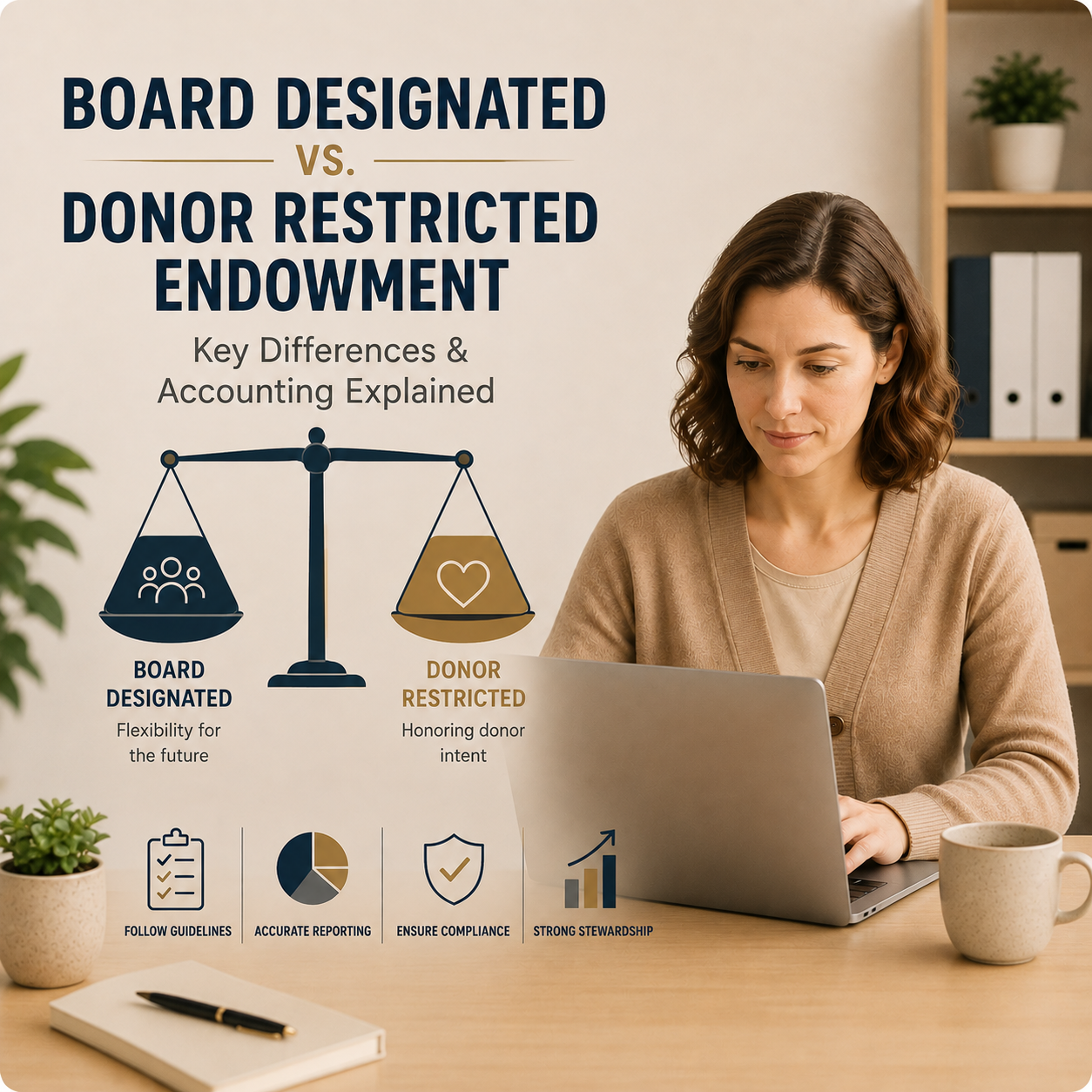
- Temporary restriction: Donor limits use by time or purpose (e.g., “to be used for FY25 program costs”). The restriction is released when the condition is met.
- Permanent restriction: Donor requires that principal be preserved in perpetuity (endowment). Only earnings are available for spending unless donor or law allows modification.
Essential Documentation for Restricted Gifts
For every restricted gift retain:
- The signed gift agreement or donor email that specifies restriction language
- Board minutes accepting the gift if the board had to authorize terms or accept designation
- Any legal instruments for planned gifts or trusts
Tracking Restrictions in Accounting Systems
Best practice entries:
- Record contribution as restricted revenue (temporarily or permanently) upon receipt.
- Use fund accounting to isolate restricted resources. Tag transactions with fund and grant IDs.
- Maintain a restriction ledger or spreadsheet that lists: donor, restriction language, fund ID, date received, total amount, amounts released, and current balance.
Sample restriction-tracking spreadsheet columns
- Fund ID | Donor Name | Restriction Language | Date Received | Original Amount | Amount Spent | Remaining Balance | Release Date | Notes
Policies for Releasing or Changing Restrictions
If the organization wants to change how restricted funds are used:
- First, check whether the donor explicitly allows flexibility. If not, seek written donor consent.
- For historical gifts where the donor is unavailable, legal doctrines (like cy pres) may apply — in such cases, consult counsel before redirecting funds.
- Document any board actions authorizing use changes and the rationale.
IRS and Legal Compliance Considerations
A couple of practical reminders:
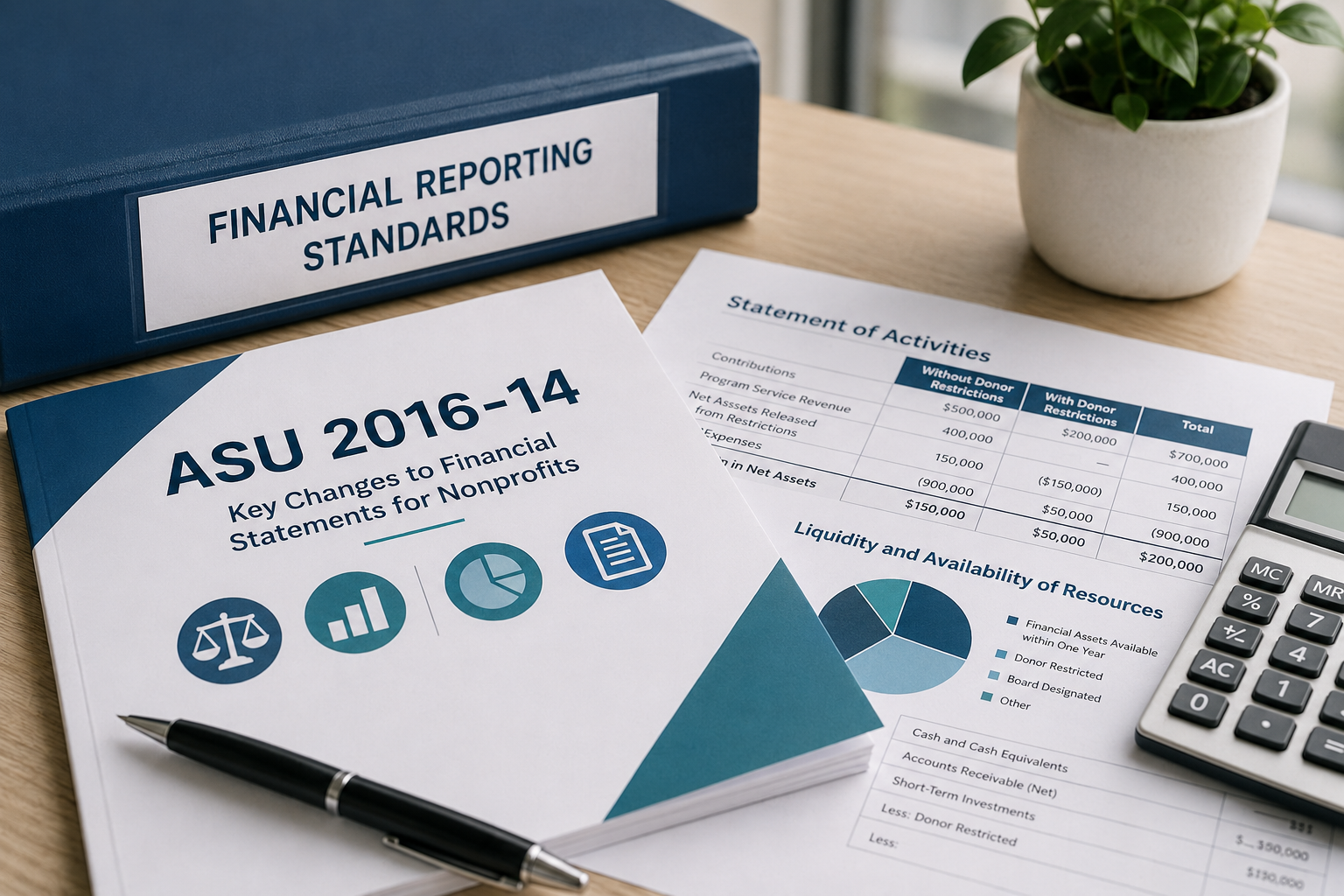
- Notably, donor intent affects Form 990 reporting lines for contributions and net assets.
- Never treat donor restrictions lightly — after all, misclassification can confuse auditors or funders and raise questions on stewardship.
- When in doubt about endowment or modification issues, work with counsel and your CPA.
Wrap-up: Accurate restriction tracking protects both donors and your nonprofit’s financial integrity.
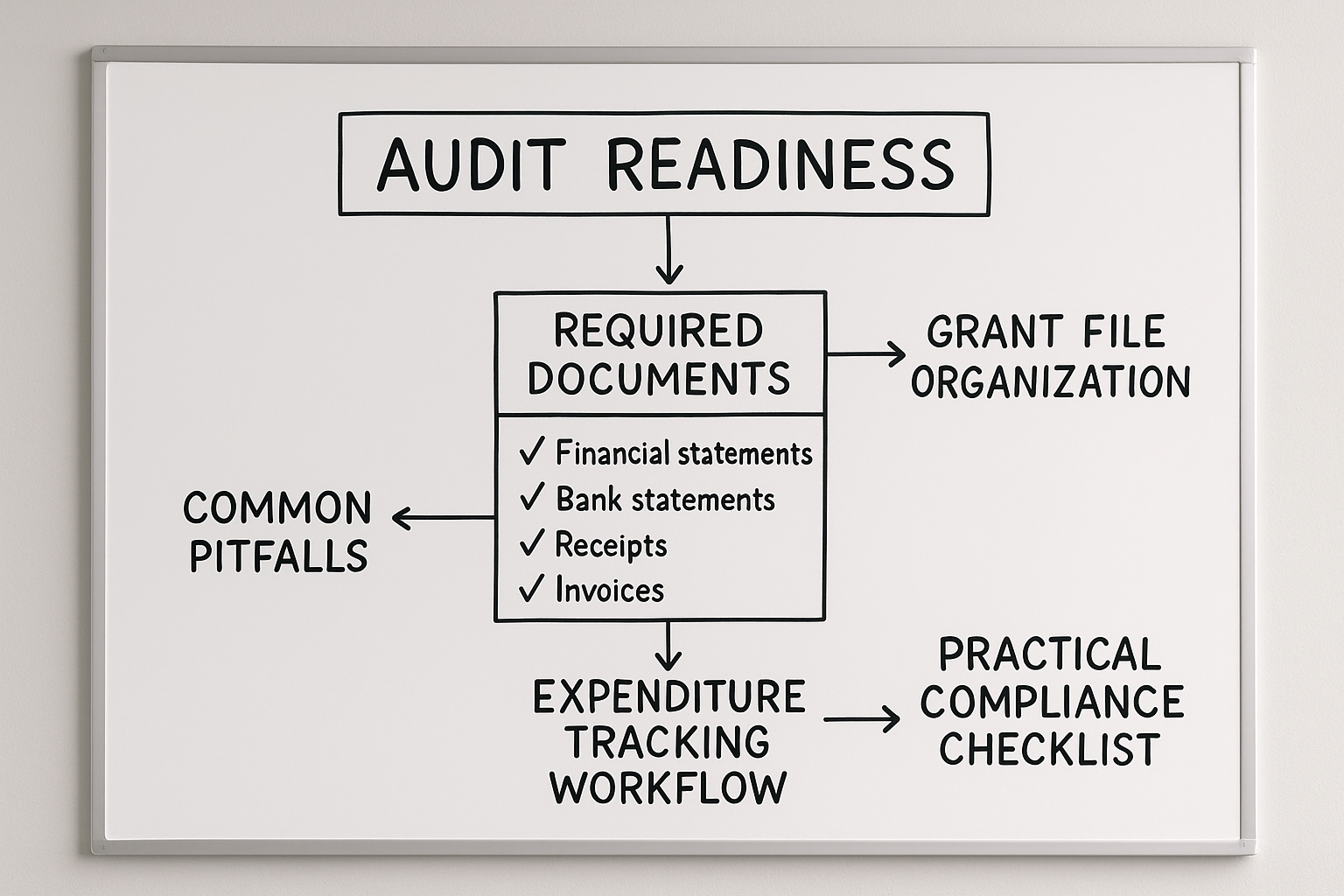
Preparing Grant Documentation for Audit Readiness
Core Documents Required for Grants Audits
Create a checklist with distinct document categories auditors expect:
- Award letters and signed grant agreements and amendments
- Payments, invoices, and bank statements linked to grant transactions
- Payroll records and timesheets showing allocations to the grant
- Procurement files, bids, and vendor contracts for major purchases
- Programmatic evidence: progress reports, participant lists, photos, deliverables
- Subrecipient monitoring documentation (if you passed funds through)
- Correspondence with the funder regarding approvals, scope changes, or issues
Organizing a Grant Binder or Digital Repository
Folder structure suggestion — a single place per grant:
- /Grants/Acme Foundation – 2025 STEM Grant/
- Agreement and Budget/
- Financials (invoices, bank statements)/
- Payroll Allocations/
- Program Reports and Evidence/
- Procurement and Contracts/
- Correspondence/
- Closeout Documents/
Also, make naming consistent (YYYYMMDD_description.pdf) and keep an index file that lists key documents and their locations.
Best Practices for Financial and Programmatic Recordkeeping
- Link line-item expenditures to receipts and program evidence. If you paid for buses to transport participants, keep the invoice, proof of payment, and an attendance list showing participants.
- Reconcile grant subaccounts monthly and document who reviewed the reconciliation.
- Maintain an audit trail for approvals — signatures, emails, or a workflow management tool.
Common Audit Pitfalls and How to Avoid Them
- Missing program evidence — attach deliverables to the expense record.
- Inadequate timekeeping — require staff to code time and have supervisors approve timesheets.
- Poor procurement documentation — document competitive process or explain single-source exceptions.
- Unclear labeling — inconsistent fund IDs make tracing funds painful. Standardize and enforce naming.
Role of Internal Controls and Staff Training
Internal controls reduce risk:
- Separation of duties: different staff for approval, recording, and custody of assets when possible.
- Periodic internal reviews: simulate an audit by pulling a random sample of grant expenses quarterly.
- Staff training: ensure program, finance, and development staff understand documentation and reporting responsibilities.
Wrap-up: Audit readiness is the payoff for disciplined recording; think of it as good stewardship, not just box-checking.
What To Do Next Implement Donor Intent Policies and Get Audit Ready
A practical 60–90 day action plan
- Inventory high-risk funds and grants (those with restrictions or large dollar value). Gather missing agreements.
- For each restricted gift, create or update a one-page summary: donor, purpose language, fund ID, amount, reporting requirements, and next key date.
- Enter all fund and grant deadlines in a shared calendar and assign owners.
- Standardize a donor agreement template and a grant acceptance checklist. Train staff on when each is required.
- Build (or clean) a digital grant repository using consistent folder structure and naming conventions.
- Run an internal “audit readiness” mini-check on one major grant: pick 10 expenses and trace them from ledger to receipt to program evidence.
Digital tools and simple systems that help
- CRM systems (DonorPerfect, Bloomerang, Salesforce Nonprofit Cloud) for donor intent records.
- Accounting software with fund accounting or classes/tags (QuickBooks Online, Sage Intacct).
- Document repositories (SharePoint, Google Drive) with version control and access logs.
- Grant management platforms or simple spreadsheets with fund IDs, deadlines, and owners.
One firm mention where it fits: If you want help designing policies or a fund accounting structure rooted in nonprofit best practices, Telos CPAs works exclusively with nonprofits and can advise on how to link donor intent to finance and audit processes.
Final thought: Documenting donor intent and keeping grants audit-ready isn’t glamorous. But it’s the difference between a grateful donor who gives again — and a messy file that costs you funding and reputation. Do the small things consistently, and you’ll protect the big things that matter.